NZWAR | Civil Defence & National Resilience | Hypothetical Scenario and Policy Proposal | October 2026
If New Zealand Were Invaded
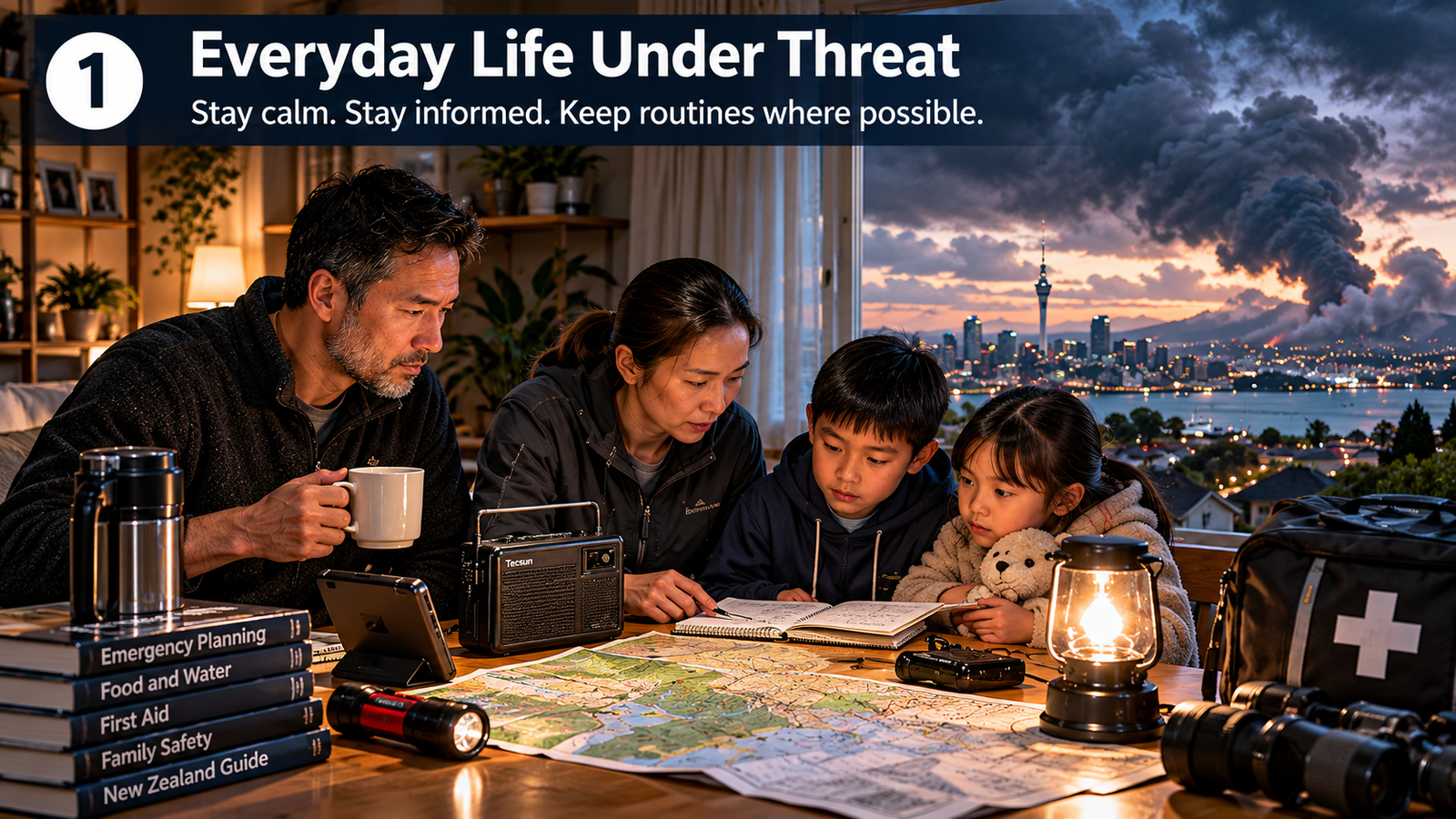
Imagine a hostile force establishing a secure foothold on New Zealand’s coast, supported by a deep-water port. While the government and armed forces continue to function, electricity networks, fuel distribution, telecommunications and logistics are repeatedly disrupted. For ordinary residents, the immediate questions become simple: Can we turn on a light tonight? Charge a phone? Contact our neighbours? Help an older person living alone? This is a hypothetical scenario, not a prediction of an imminent invasion. Its purpose is to test whether society could keep functioning when national infrastructure could not.
The Vulnerability of Centralised Systems
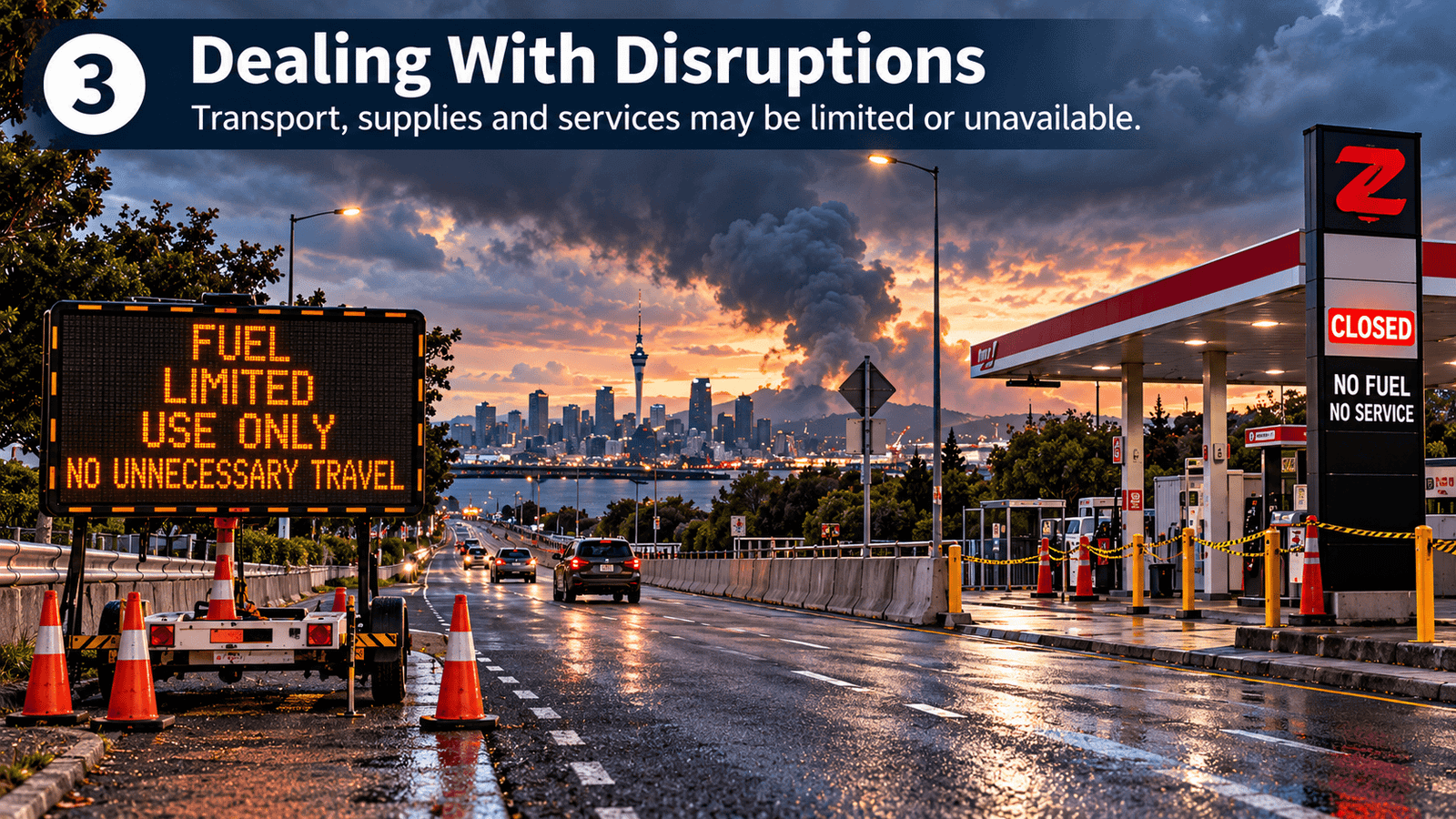
Centralised electricity, fuel, water and communications systems are efficient in peacetime. They can also create dependencies on a limited number of critical facilities and connections. Modern conflicts show how disruption of energy and logistics can affect civilians far beyond the location of an attack. The answer is not to abolish national infrastructure or decentralise specialist hospitals. It is to give communities a practical fallback. Centralised systems deliver efficiency; distributed capabilities provide continuity when those systems fail.
Start with Three to Five Neighbouring Households
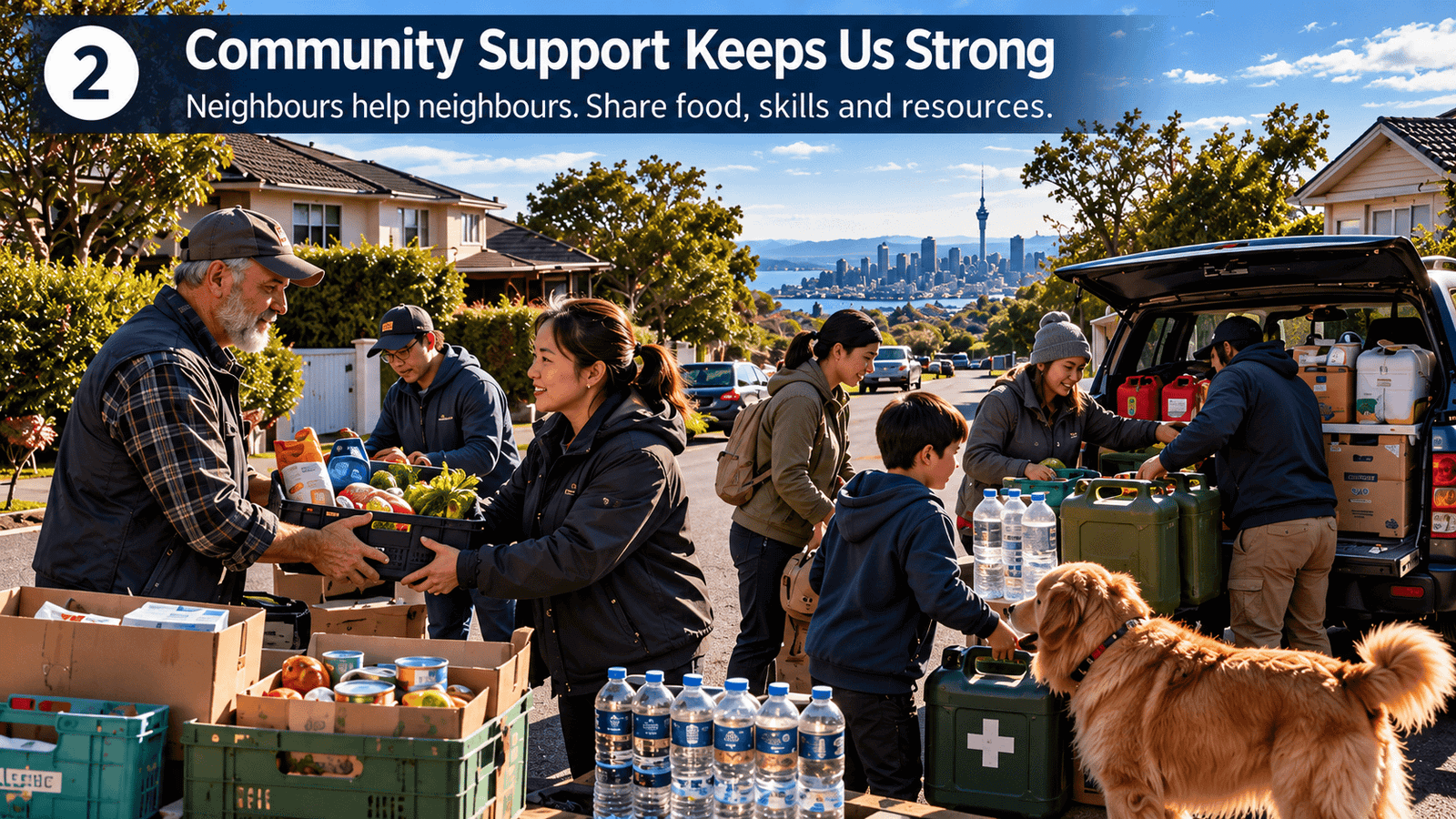
NZWAR proposes voluntary Neighbourhood Resilience Units comprising roughly three to five adjacent households. These are civilian mutual-aid groups, not combat units. Neighbours can identify who may need assistance, share basic tools, organise drinking-water collection, support first aid and help keep communications operating. A resident with limited mobility should not have to lift heavy supplies or navigate an extended blackout alone. Each group needs simple responsibilities, an agreed contact plan and periodic practice—not a new bureaucracy.
Generators Belong with Households; Fuel Belongs at Street Level
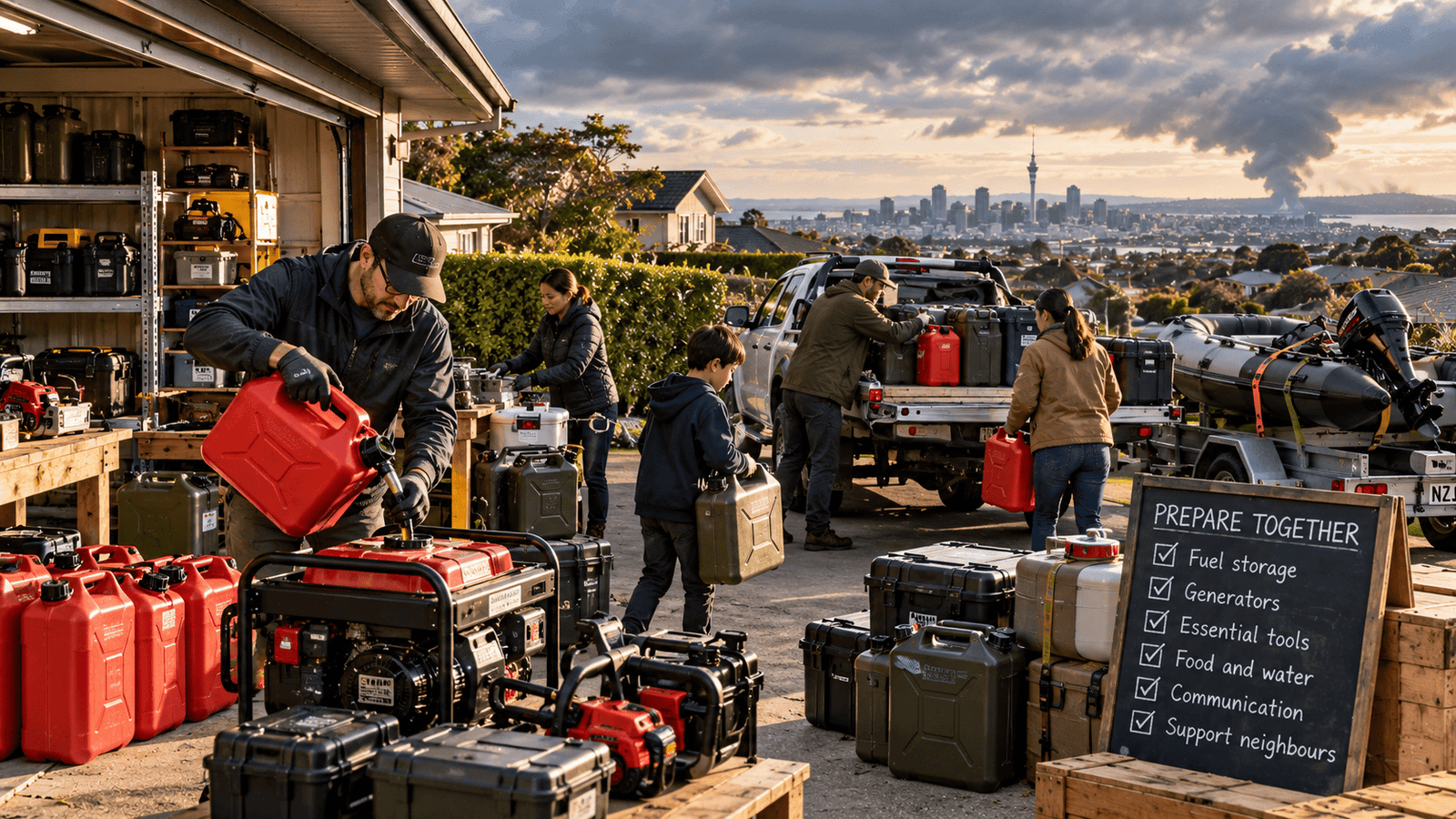
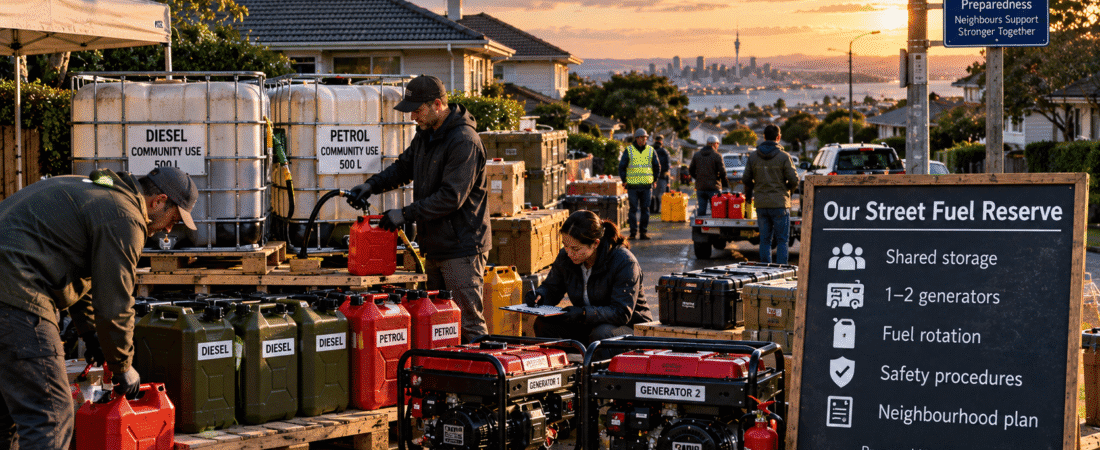
The energy proposal is deliberately modest. Government would procure and provide one or two portable generators per three-to-five-household unit, depending on need. Their purpose is essential lighting, phone and radio charging, and limited priority electricity—not running every household’s appliances or preserving normal comfort. There is no proposal for a central neighbourhood power station, solar installation or large battery scheme. Instead, a street or group of nearby streets would have a professionally managed emergency fuel reserve. Its size would be calculated from household numbers, population, expected generator consumption and the intended emergency supply period. Fuel would be reserved for approved emergency generators and essential services, not ordinary private-car refuelling. Distribution would follow a transparent rationing plan. Generators must operate outdoors in safe positions to prevent carbon-monoxide poisoning; fuel handling and electrical connections require proper safeguards.
Build the Tanks Before the Crisis; Fill Them When Risk Rises
Preparedness need not mean keeping every local tank full indefinitely. The government could identify suitable sites, approve standard tank designs, establish manufacturing and installation contracts, and maintain some empty or low-stock capacity in peacetime. As a credible threat emerges, authorities could increase fuel stocks in stages before transport and import systems are disrupted. Empty tanks alone provide no resilience if the supply chain fails before they are filled. Fixed tanks are familiar engineering, and local fabrication may be feasible, but welded tanks still require qualified construction, leak testing, fire protection, environmental controls and lawful siting. Whether above or below ground, storage must be professionally designed rather than improvised beside homes or buried beneath streets without assessment.
Public Fuel Is a Managed National Asset
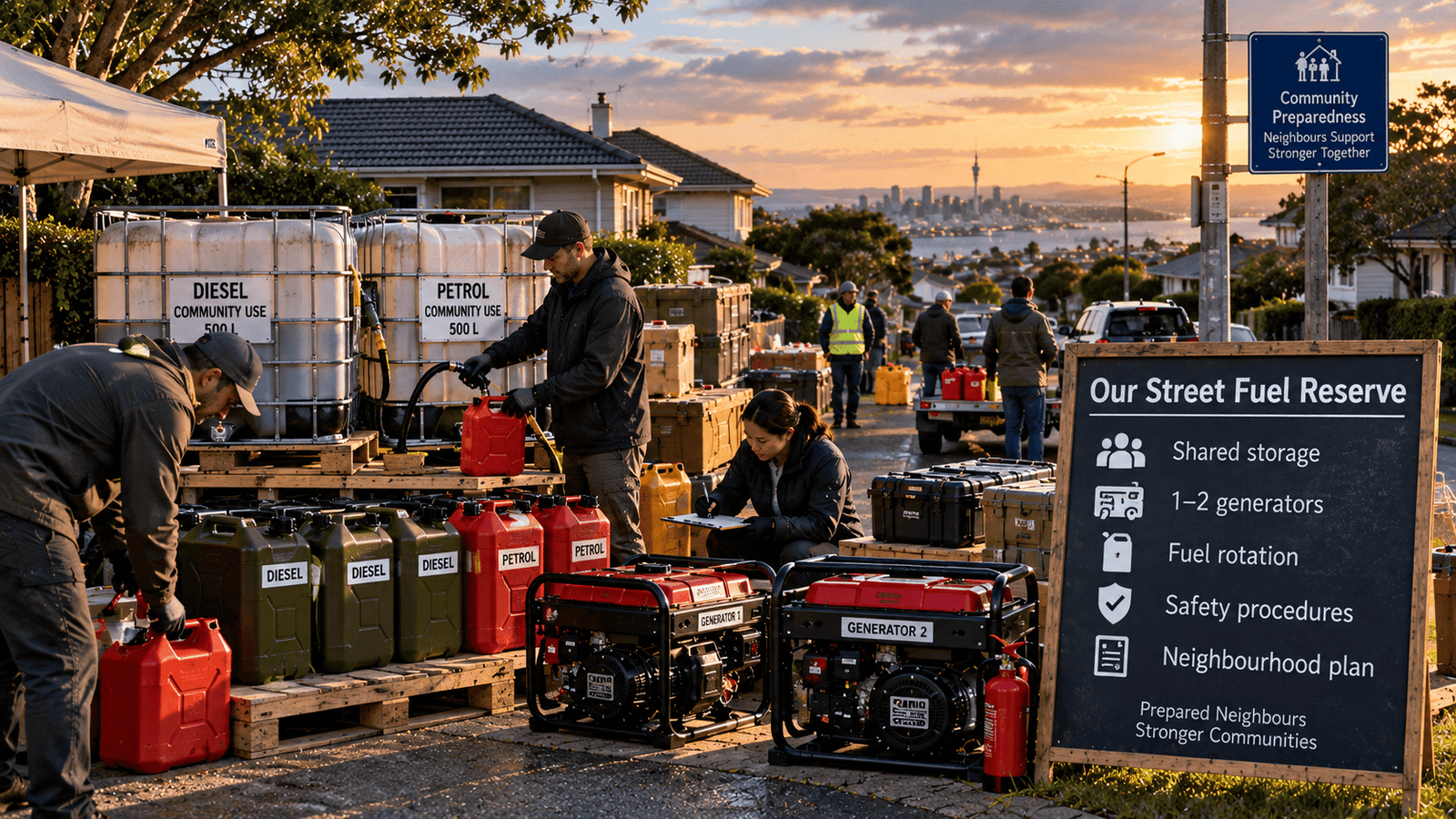
Fuel held for emergency generators can remain government property. Where ongoing inventory is justified, fuel quality can be checked and suitable stocks rotated through public-sector consumption or lawful commercial channels, then replaced. Some sites may remain empty until a specified risk threshold is reached. The costs include tanks, installation, maintenance, testing, administration, financing and any losses on rotation; resale cannot be assumed to recover every dollar. But a planned, auditable inventory is more useful than a last-minute purchasing scramble.
Government Must Supply Equipment, Not Just Advice
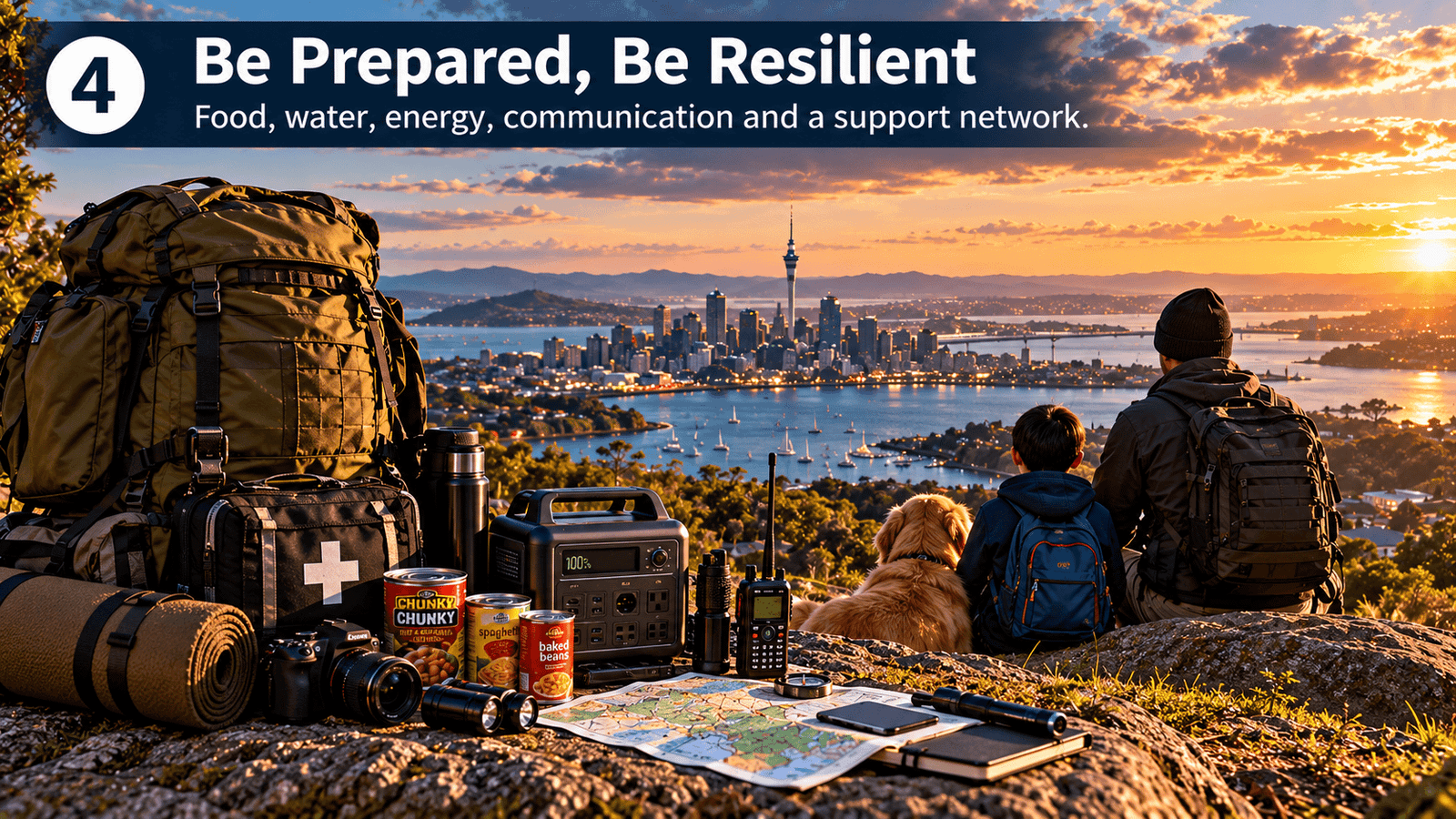
Household preparedness guidance matters, but advice alone does not create equipment, and not every family can afford an independent emergency kit. A Government-Funded Neighbourhood Resilience Programme could buy generators in bulk, hold ready-to-distribute stock, provide basic lighting and communications equipment, support drinking-water and first-aid supplies, and organise training. Direct provision is particularly important for lower-income households and people who cannot easily purchase, store or maintain equipment themselves. A public warehouse must contain real, working supplies; it cannot be a promise on a website.
Keep Specialist Services Coordinated, but Offer More Than One Distribution Point
Hospitals, prescription medicines, food safety and major logistics still need professional oversight. Yet concentrating all public access at a single collection point creates an avoidable dependency. Regional authorities can control inventories while arranging multiple smaller distribution channels, with help for residents unable to travel. Neighbourhood groups can support welfare checks and basic first aid without replacing clinicians or emergency responders. The goal is not total decentralisation; it is continuity when any one facility becomes unavailable.
Pilot the Plan, Measure the Costs and Scale It
Start with pilot neighbourhoods in cities, suburbs and rural areas. Count households and residents; establish realistic generator duty cycles and fuel use; test collection arrangements, storage safety, maintenance, training and equipment distribution. Government can then compare the cost of one or two generators per unit with street-level fuel-storage options, including the use of existing compliant facilities. Standard designs, advance procurement agreements and risk-based filling triggers could reduce delay when conditions worsen. A generator that has never been maintained or tested is not a credible reserve.
A Plan for Disasters as Well as War
New Zealand also faces earthquakes, storms, floods, landslides and major outages. The same household groups, generators, emergency supplies and fuel arrangements could support communities after a natural disaster. That dual use is a major reason to examine the proposal now rather than only after a military threat appears. It is an investment in public resilience, not simply a wartime expense.
National Resilience Begins on the Street
New Zealand needs capable national institutions and critical infrastructure. It also needs local people who can help one another when those systems temporarily fail. Three to five households. One or two shared generators. Street-level fuel reserves sized to actual need. Government-funded equipment and a clear plan to distribute it. None of these ideas requires futuristic technology. What they require is political commitment, engineering discipline and preparation before the emergency. Government must do more than tell people to prepare. It must help ensure that the means to prepare actually exist. A nation does not survive because every power station keeps running. It survives because its communities can keep functioning when the power stations stop.
Editorial note: This article examines a hypothetical invasion scenario. Its neighbourhood units, generator allocations and fuel-storage arrangements are policy proposals, not descriptions of existing New Zealand government programmes. Implementation would require engineering, regulatory, financial and public consultation.