


1. War Is More Than a Contest of Military Power
Discussions of modern warfare often focus on the cost of advanced weapons, the ability of inexpensive drones to intercept sophisticated systems, attacks on power grids, disrupted deliveries, and damage to hospitals and other essential facilities.
These are not isolated, minor issues.
From a strategic perspective, sustained attacks on energy, transport, communications and supply networks may be intended not only to weaken an opponent’s military capacity, but also to test the resilience of its society and the population’s willingness to comply under mounting pressure.
When electricity fails, fuel becomes scarce, food distribution falters and hospitals come under strain, the test extends beyond government administration. It reaches society’s ability to maintain daily life and its willingness to continue resisting.
But what is the ultimate purpose of war? If resistance is intended to protect a nation, what should that nation protect first?
The answer begins with three fundamental dimensions of survival: life, society and culture.
A nation’s resistance should not exist merely to perpetuate war. It should protect its people and their shared future.
2. The Three Survival Foundations of War
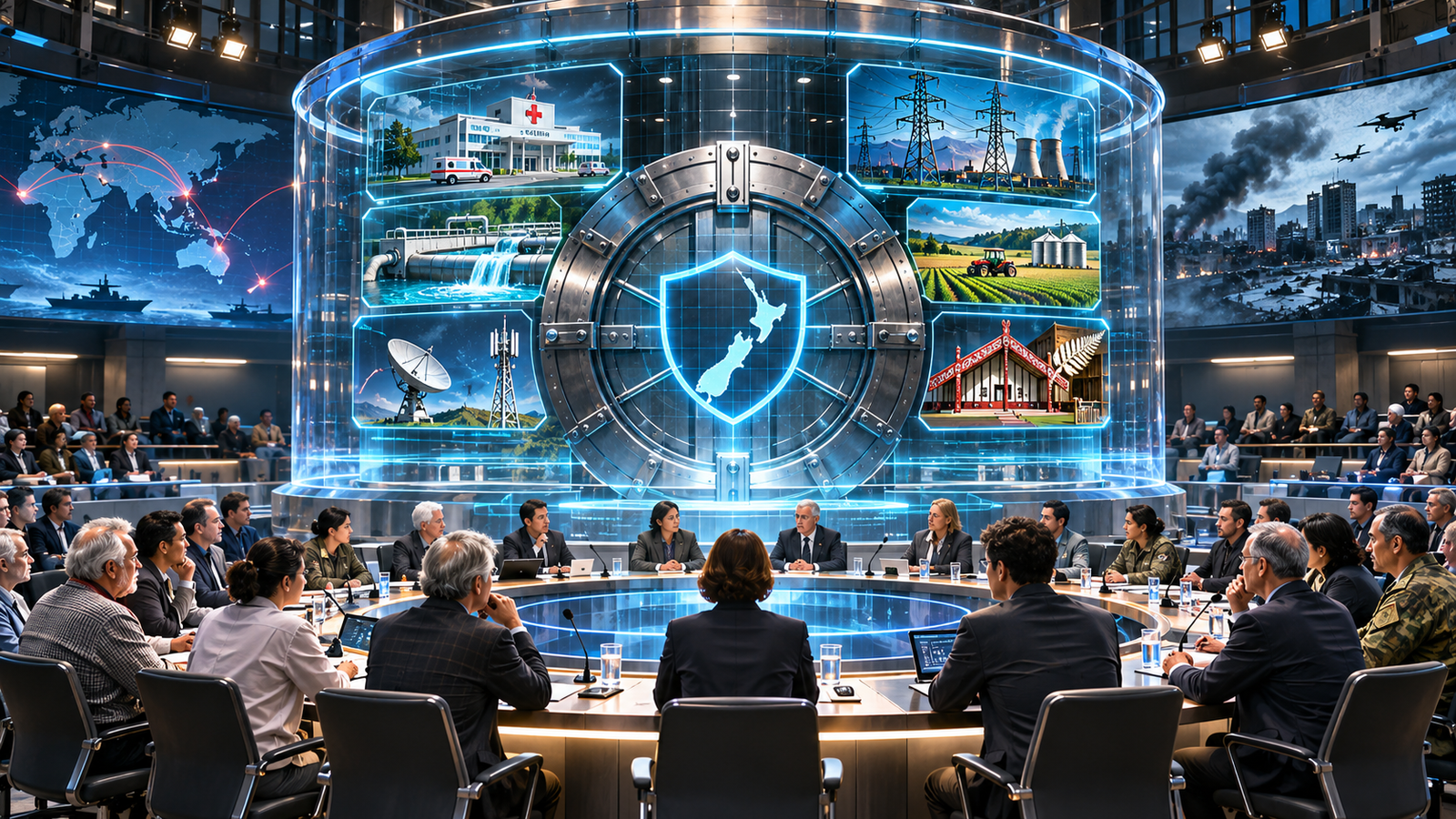
First: the right to life and survival. Human security is the most fundamental concern. It includes military and civilian casualties, medical care, population safety, and the long-term effects of war on people’s ability to survive.
Second: the continuity of society. A society must retain the ability to function: food, energy, clean water, healthcare, transport, emergency relief, public order, and the trust and mutual assistance that hold communities together.
Third: cultural survival. People must be able to speak their languages, receive cultural education, preserve historical memory and pass their heritage to future generations.
Historically, Indonesia imposed extensive restrictions on Chinese-language education and aspects of public Chinese cultural expression. That history illustrates how a community can continue to exist physically while its cultural continuity is seriously constrained.
These three dimensions together define the conditions for national survival. They are not mere numerical scores, nor can they be mechanically converted into orders to continue or end a war.
War is dynamic. Severe losses in one area may demand a strategic reassessment. But if an aggressor seeks to destroy a population, laying down arms may not protect that population at all.
Accordingly, these indicators should trigger a renewed review of war policy, not automatically dictate surrender or continued fighting. When any dimension reaches the highest level of existential threat, the country should initiate an urgent, top-level review of how best to preserve its people.
3. Two Extremes of Wartime Power Must Be Prevented
During war, governments must organize defence, concentrate resources and maintain effective military command. Yet war must not become a justification for the unchecked expansion of power by a few individuals.
There are two dangerous extremes.
One is to invoke nationalism, ideology or personal conviction to demand that the entire country fight to the bitter end, regardless of the real human cost.
The other is for a small group of leaders to claim to represent the people while making unilateral decisions to cease fighting, concede vital interests or accept terms that undermine the nation’s future for their own benefit.
These extremes point in opposite directions but share the same defect: the people bear the cost of war while losing the right to shape their own destiny.
A democracy needs institutional restraints on wartime authority, rather than relying solely on the promises or judgment of individual political leaders.

4. Establishing a National Defence Safeguard
We propose a national system of wartime oversight and democratic authorization: the National Defence Safeguard.
It is not a computer that automatically decides when a war must end. It is a framework of public decision-making, established in peacetime and maintained during war.
Before conflict, the country should use lawful democratic processes to define major defence policies, authorization rules, oversight arrangements and the circumstances that require a renewed review.
During conflict, the Safeguard would continuously assess changes in the three survival dimensions: life, society and culture.
When a review condition is triggered, the government must initiate the appropriate process, explain the facts that can safely be disclosed, report the losses sustained, and set out the likely consequences of different policy choices.
The outcome might be continued resistance, a change in strategy, negotiations, or another measure to protect national survival.
Reaching a predetermined numerical threshold must never automatically execute a fixed wartime order.
Indicators raise questions; democratic institutions review them; legally authorized national authorities implement the resulting decisions.
The Safeguard should also preserve records of major policy authorizations, reviews and responsible decision-makers, supporting ongoing scrutiny and accountability after the war.
5. A Wartime Citizen Communication System Must Be Ready Before an Invasion
The National Defence Safeguard cannot exist only in legislation and policy papers. It needs a functioning public communication and civil administration system.
In peacetime, the state should build, test and deploy a wartime citizen app, servers and backup communication infrastructure.
If the country is invaded, these services should be activated immediately, rather than developed in haste after networks and infrastructure have already been damaged.
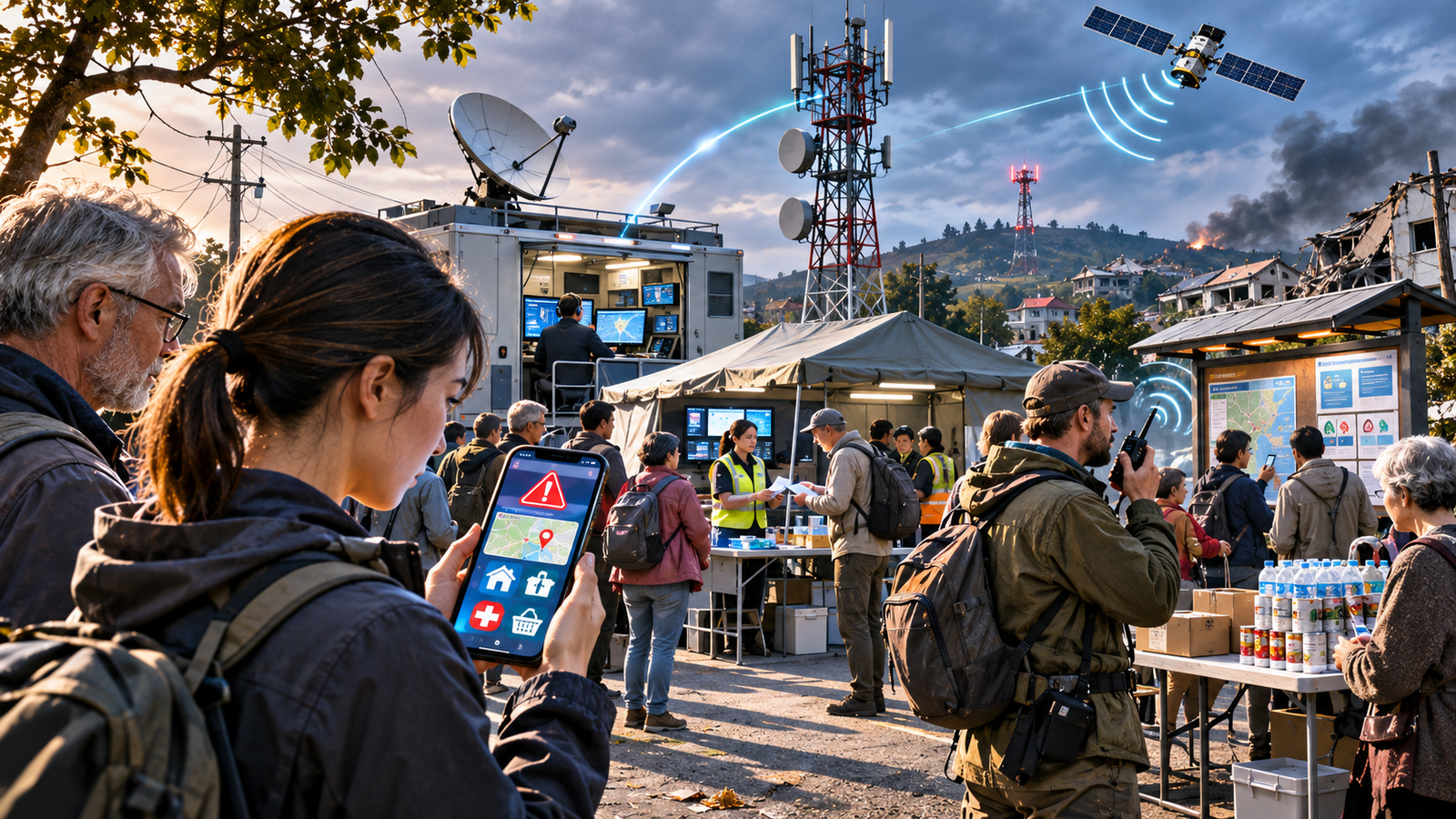
The system’s first responsibility is civilian survival. It should deliver official shelter guidance, evacuation notices, emergency supply collection points, medical service information, updates on water and electricity restoration, and other essential public safety announcements.
At the same time, the app should serve as the public information channel for the National Defence Safeguard.
When a survival indicator triggers a formal review, the government should notify citizens of the reason for the review, the questions under consideration, the available policy options and the ways they can participate.
If a lawful national vote becomes necessary, eligible citizens should be informed when, where and how to vote.
Citizens would no longer merely receive wartime orders. They could follow the country’s circumstances and participate through lawful procedures in decisions that shape its future.
However, no such system should depend on a single server or communications network. Power failures, network outages, cyberattacks and occupation may disconnect entire regions.
Backup servers, resilient communications, data protection and offline public information channels must therefore be prepared in advance. Civil service counters, community organizations and other public institutions should be able to carry information and assist residents when digital channels fail.
Technology should connect government with citizens, not make their safety and political rights dependent on a single app.
6. Use the App for Notification and Verifiable In-Person Procedures for Voting
Digital technology can greatly improve the speed of communication between a government and its citizens. But decisions about a nation’s wartime direction require especially credible voting procedures.
Electronic voting raises questions about authentication, cybersecurity, ballot secrecy, independent auditing and public confidence. Paper ballots are not immune to fraud either, but physical records, observers and independent recounts can provide important means of verification.
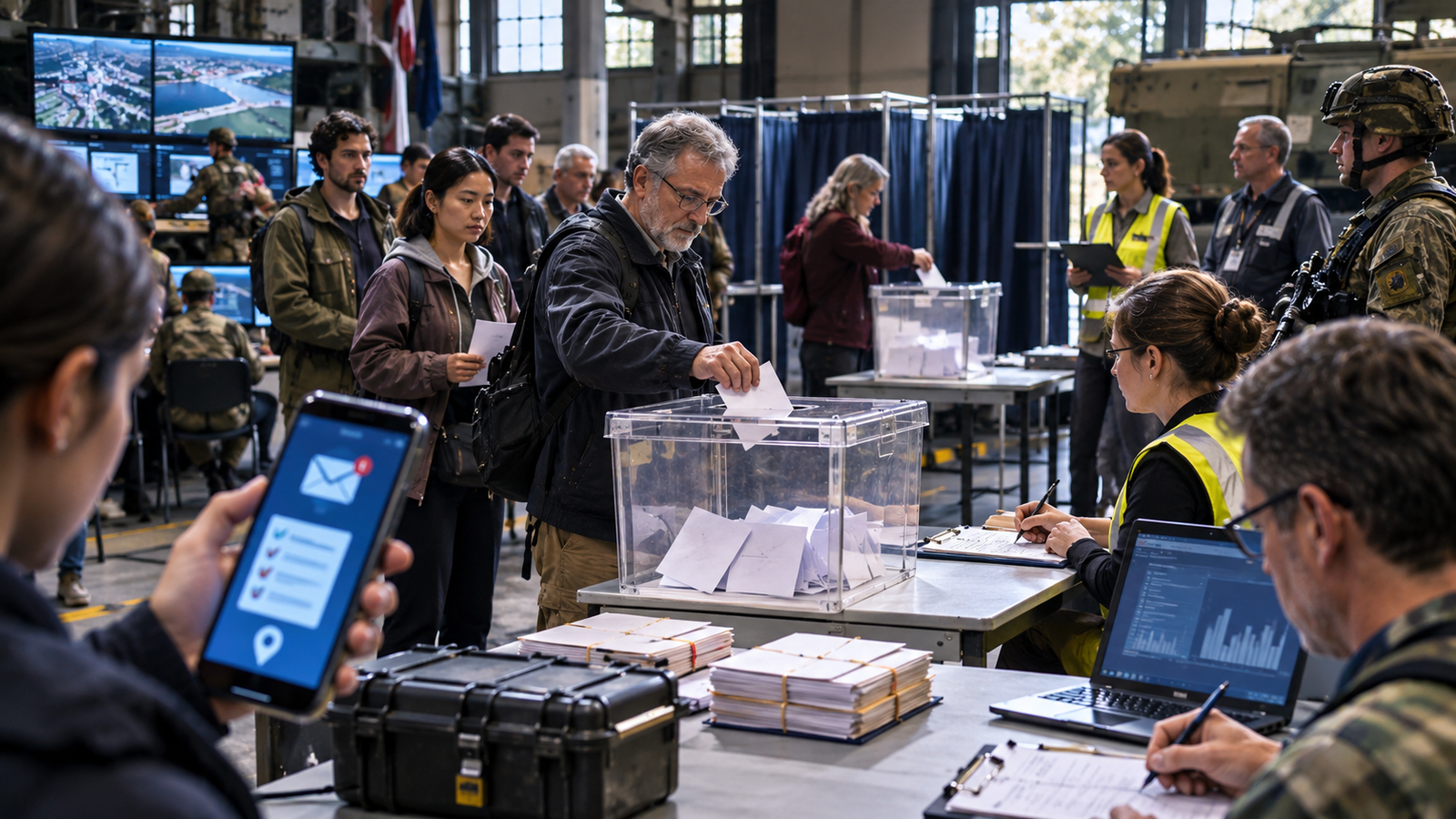
Where society retains sufficient organizational capacity, the National Defence Safeguard could therefore prioritize official app notifications, physical polling stations, paper ballots, independent observation and auditable results.
Citizens would receive formal notices through the app and learn the questions and locations for voting. They would then attend legally established polling stations, verify their eligibility and cast secret ballots.
Independent oversight and lawful recount procedures should be available.
For injured people, older citizens, displaced residents, refugees abroad and people in disconnected areas, the state must prepare lawful, secure and verifiable alternative participation methods in advance.
Where military occupation or coercion makes a free vote impossible, purported results cannot simply be treated as an authentic expression of public opinion.
This framework does not require daily referendums. A vote would take place only when the legally established conditions for a major review are met and the appropriate constitutional procedures authorize it.
Ordinary military command would remain with the government and armed forces under the law.
Democratic oversight must not paralyze necessary defence, but wartime emergency powers must not become an excuse to permanently remove the people’s right to choose.
7. A Review or Exit Mechanism Is Not a Call for Surrender
One of the easiest ways to misunderstand the National Defence Safeguard is to mistake its review and exit mechanisms for a proposal to surrender.
They are not.
Some may argue that even discussing the possibility of ending a war weakens resistance. But a review does not predetermine its outcome.
If a conflict concerns overseas alliance commitments rather than an immediate threat to the nation’s survival, citizens have reason to demand an explanation of the necessity and cost of continued involvement.
If the homeland is invaded, citizens likewise have a right to understand the situation and participate in major national policy choices.
If an aggressor seeks to systematically destroy a population or its culture, surrender may offer no protection at all. A renewed review could instead reaffirm the need for continued resistance.
So the real question is not simply whether to fight or stop fighting. It is: Why are we fighting? What are we protecting? Do our current actions still serve the survival of our people?
These questions must be revisited as circumstances change.
8. The People’s Own Choice Is a Source of Resistance
This is the most important purpose of the National Defence Safeguard.
When a country is invaded, its government can organize troops, issue orders and mobilize supplies. But commands alone cannot guarantee that people will continue to believe in the war.
When citizens are denied reliable information and meaningful participation, they may comply without conviction.
By contrast, when citizens possess the rights to know, to express their views and to participate in legitimate decisions, and when their collective choices are respected by the state, they have stronger reasons to accept responsibility for their shared future.
If, after informed public debate, the people decide to continue resisting, resistance is no longer merely a demand issued by government. It is also a decision in which citizens have participated.
That sense of ownership can strengthen the capacity of the whole society to act.
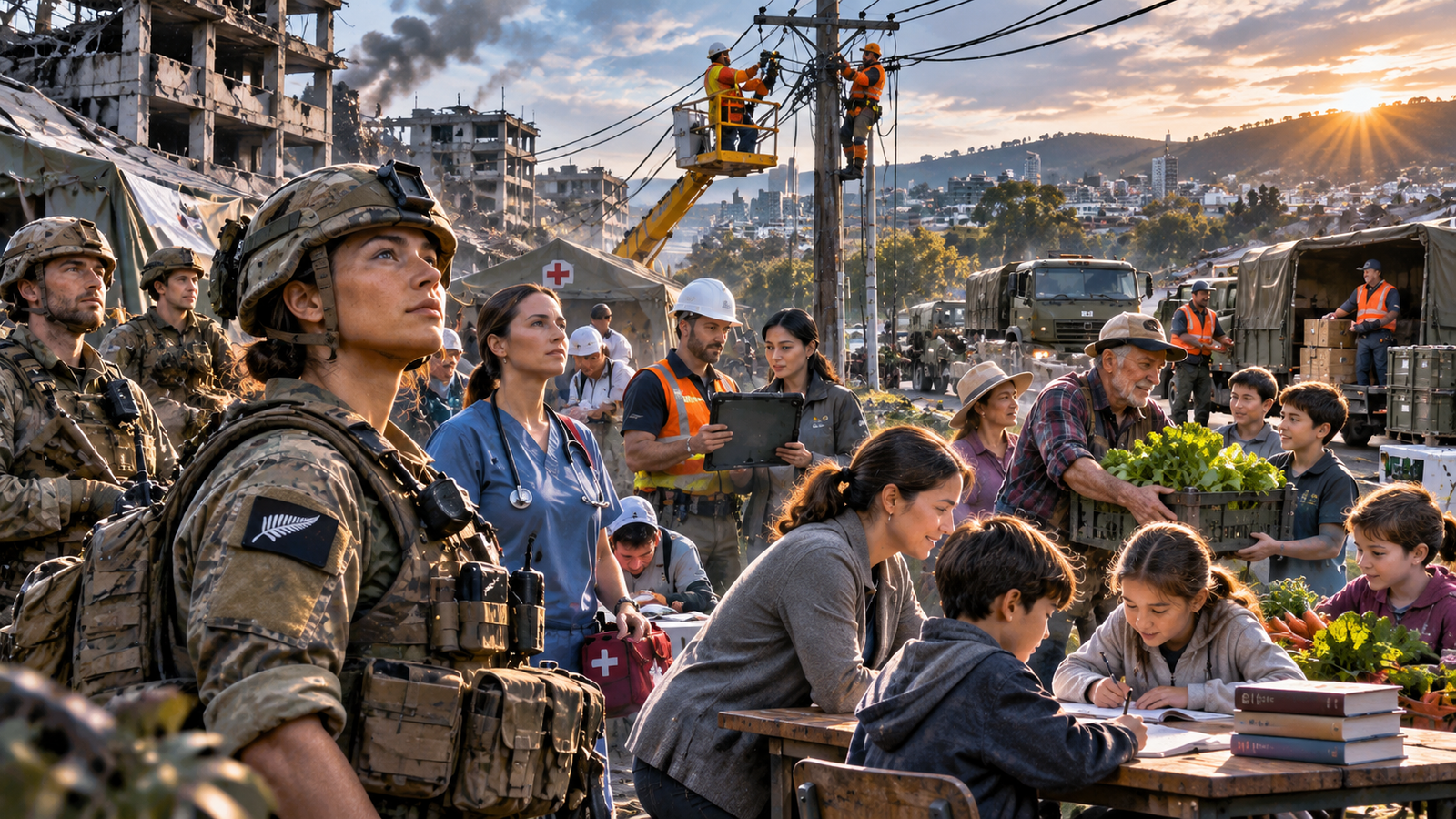
Soldiers defend their homes. Doctors treat the wounded. Engineers restore electricity. Drivers transport supplies. Farmers sustain food production. Teachers preserve education and culture. Neighbours support one another.
Everyone can contribute according to their abilities to the survival of their community and country.
Democratic decisions do not mean every citizen must agree or that individual legal rights can be discarded. Social resilience requires both shared purpose and respect for dissent.
When people know their choices are respected, they have stronger reasons to contribute voluntarily to protecting their common future.
Resistance built on trust and identification with a common purpose cannot simply be replaced by empty political slogans.
9. A Nation Worth Defending Must Respect Its People’s Decisions
War can destroy infrastructure, drain economic resources and cause enormous loss of life. Yet a nation’s capacity to resist depends not only on the weapons it still possesses, but also on whether its people believe its institutions deserve their trust.
A government that demands sacrifice while denying people facts, a voice and oversight may gradually erode the very public confidence that sustains social unity.
Likewise, if a small group of leaders can decide the nation’s fate without lawful authorization, democratic institutions lose their essential meaning.
The National Defence Safeguard seeks to keep wartime power under legitimate oversight and preserve citizens’ ability to participate in determining their common future, even in the country’s most difficult hours.
It is not designed to manufacture reasons for surrender. Nor does it endorse unconditional war.
Its purpose is to give resistance a clear objective, enduring public legitimacy and the institutional capacity to reconsider its direction.
We do not exist in order to wage war.
We choose to resist, when necessary, in order to survive.
Lasting resistance should arise not merely from orders, but from people’s conviction in the choices they have helped make.
NZWAR — War, Survival & National Resilience Research
This article is a policy proposal exploring wartime public information, democratic oversight, citizen authorization and safeguards for national survival.