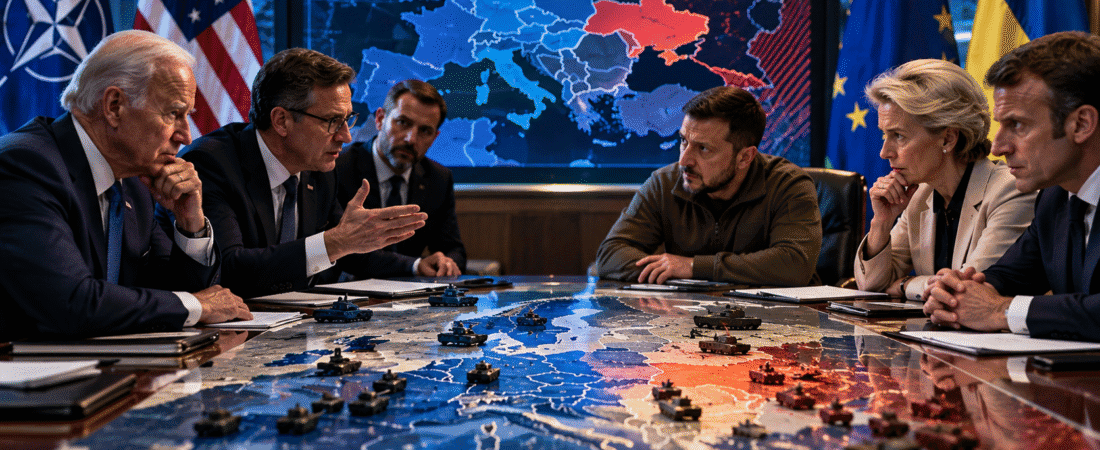
The risk of a NATO Russia war is shaped not only by military strength, but also by Europe’s political divisions, American strategic priorities and the danger of nuclear escalation.
Europe is unwilling to bear the full costs of direct war with Russia, while the United States is pursuing negotiations. Their strategic interests diverge, but neither has chosen a full-scale NATO–Russia war.
Meanwhile, Europe’s internal security problems, political divisions and long-standing defence-readiness gaps constrain its choices. Ukraine continues to bear the war’s immediate losses—and the risk of a Russian tactical nuclear strike.
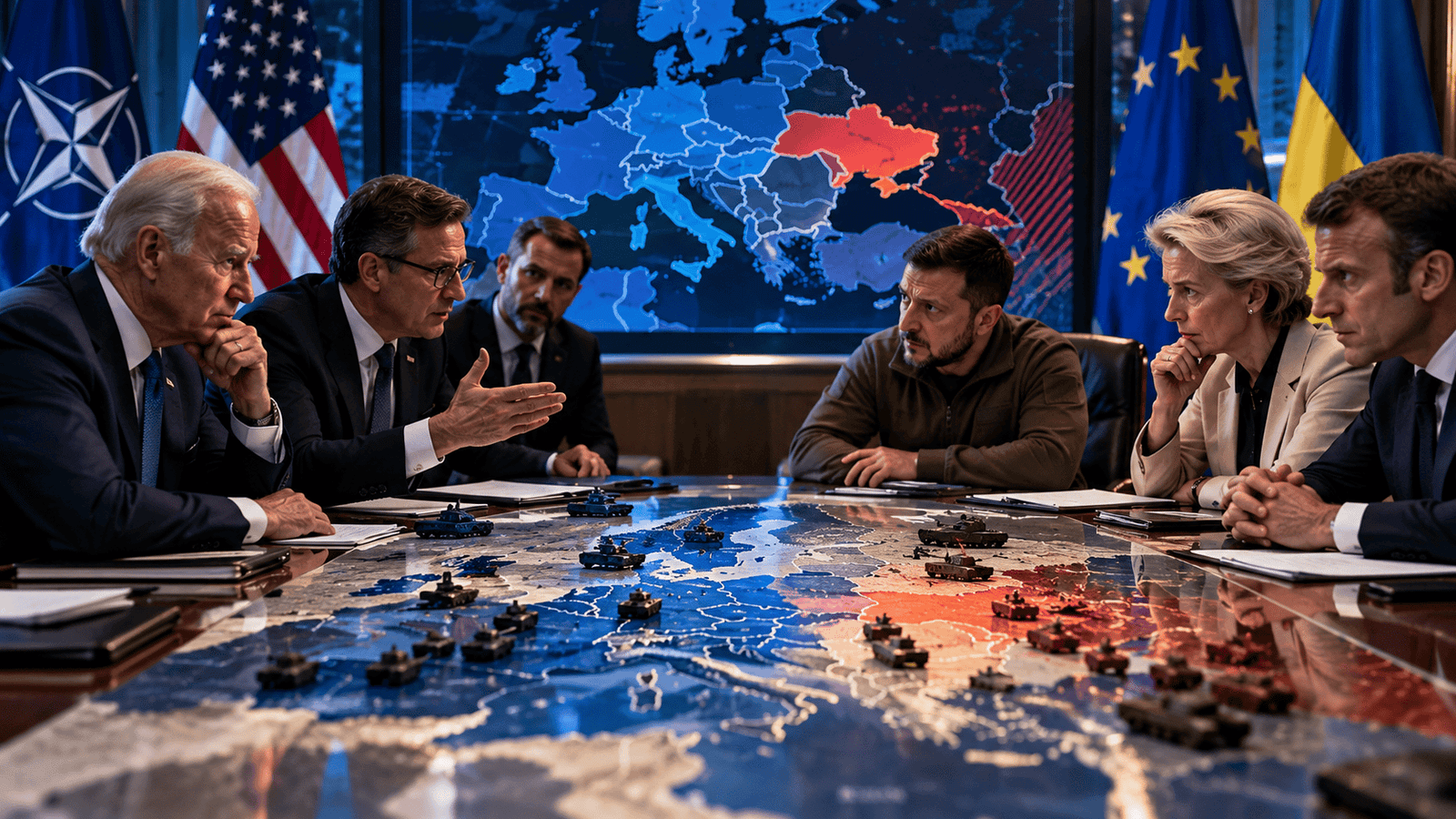
The EU avoids direct war; Washington pursues negotiations
The European Union is not NATO. But the willingness of major European states to fight Russia directly is central to what NATO actually does. European governments can supply Ukraine with weapons, intelligence and money without accepting the casualties, fiscal burdens and nuclear risks of direct war with Russia. Supporting Ukraine and entering the war are fundamentally different political decisions. The United States, meanwhile, has pursued diplomacy alongside military support. Europe’s reluctance to enter the fighting and Washington’s preference to preserve a negotiating route help explain why NATO has not become a direct combatant. This is an assessment of member states’ actions, not a claim of a single formal NATO policy to negotiate.
American and European strategic interests diverge
For European countries, Russia is an immediate geographic security challenge. The outcome of the Ukraine war will shape Europe’s borders, defence planning and security costs for decades. For Washington, Russia is one issue within a global strategy that also encompasses China, the Indo-Pacific and the Middle East. America can evaluate a settlement in terms of global resource allocation; Europe must live beside Russia after the agreement. Shared alliance interests do not eliminate these differences. European governments may fear a settlement that fails to secure their long-term position, even when Washington sees value in reducing the war’s demands on US resources.
Schengen: national border decisions can create shared costs
Schengen removes routine internal border checks across most participating countries. This facilitates movement, but also means failures in entry screening, identity verification or security coordination in one state can affect others. Border decisions are national, while some consequences are shared across the Schengen area. The issue is not that migrants are inherently dangerous. It is whether governments have planned adequately for screening, integration, housing, services and public safety. Poland is a useful case for examining the balance between national border control and free movement. Residents’ safety—particularly women’s ability to walk outside after dark—matters more than slogans. But any claim that Poland is Europe’s safest country requires comparable crime and safety-survey data; border policy alone cannot explain those outcomes. An open-border system requires equally serious shared security responsibilities.
European unrest and the question of unrestricted warfare
Protests and riots in different European countries should not automatically be treated as unrelated—or as parts of a single foreign operation. Modern strategic competition can involve disinformation, covert funding, political interference and the exploitation of existing social divisions. That makes an “unrestricted warfare” lens worth investigating. Who benefits from sustained instability? Who provides money, organisation and amplification? Recurring street actions require coordination and resources, even for ordinary signs, transport and equipment. Tracing funding and organisational links is more useful than speculating about slogans. But a beneficiary is not necessarily an organiser. Spontaneous protest, domestic political mobilisation and foreign manipulation must be distinguished with evidence. The hypothesis deserves investigation; it is not a substitute for proof.
Domestic conflict drains Europe’s ability to fight abroad
Military power is not just a stockpile of weapons. It requires industrial output, public finances, political consensus and sustained mobilisation. European governments face domestic disputes over migration, security, economic pressures and welfare spending while also being asked to expand defence production and support Ukraine. A government consumed by internal conflict will find it harder to build consensus for a costly external war. Higher defence budgets do not automatically produce factories, trained personnel or public acceptance of casualties. Sending equipment to Ukraine is politically different from mobilising European forces for a direct war with Russia. Europe’s domestic pressures are one constraint on that decision, though they do not mean Europe has lost the ability to defend itself.
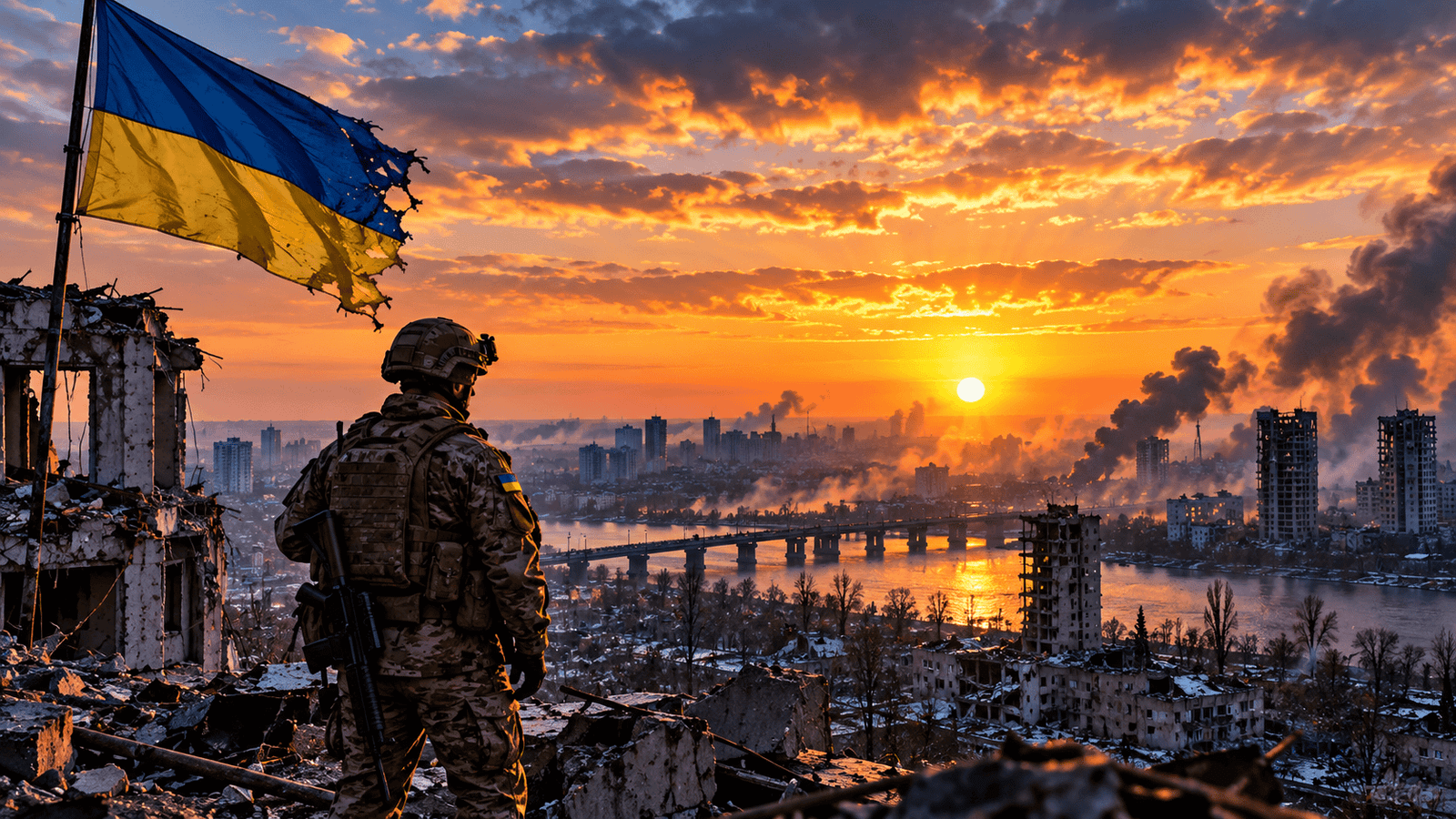
Ukraine faces the risk of a Russian tactical nuclear strike
Ukraine does not possess nuclear weapons. Its nuclear danger is therefore not a symmetrical exchange between two nuclear-armed combatants. The specific risk is that Russia might use a nuclear weapon against a target in Ukraine. If Moscow concludes that conventional operations cannot achieve its aims, nuclear threats could become more prominent in its coercive strategy. Russia’s revisions to its nuclear doctrine make that possibility important to examine. Yet conventional setbacks do not prove that nuclear use is inevitable or even likely. A tactical nuclear strike might cause catastrophic casualties without solving Russia’s problems of occupation, supply and territorial control, and could provoke severe international consequences. European governments can avoid direct participation and Washington can seek negotiations; Ukraine remains the territory most immediately exposed if Russia chooses that extreme escalation.
Europe bears responsibility for its own lack of preparation
Europe’s difficulties are not solely the product of Russian decisions. Decades of relative peace encouraged many governments to prioritise economic growth, social spending and quality of life over preparations for sustained high-intensity warfare. Debates about a four-day working week illustrate peacetime priorities, but they do not mean Europe as a whole works four days, or that shorter hours caused defence weaknesses. The relevant contrast is industrial readiness: ammunition capacity, reserves, logistics, military training and the ability to sustain production. While Europe organised much of its economy for peace, states engaged in war continued to mobilise people and industry. Those capabilities cannot be rebuilt overnight by increasing budgets. Peace is worth protecting, but it is not a substitute for preparing to defend it.
Conclusion: Europe avoids war, America seeks a deal, Ukraine bears the danger
NATO has avoided direct combat with Russia for reasons that go beyond military arithmetic. European states are reluctant to accept the human, economic and political costs; Washington weighs the war against its wider global interests and maintains a diplomatic path. Europe’s domestic pressures and gaps in sustained military mobilisation narrow its options further.
Ukraine faces the sharpest imbalance: its allies can choose how far to intervene, but Ukrainians cannot move the battlefield off their territory. If Europe wants genuine strategic independence, it must strengthen internal cohesion, defence industry and readiness before the next crisis—not only after it begins.
Editorial analysis: Claims about comparative crime levels, foreign sponsorship of unrest and any future nuclear decision require specific evidence. This article distinguishes strategic hypotheses from established facts.